
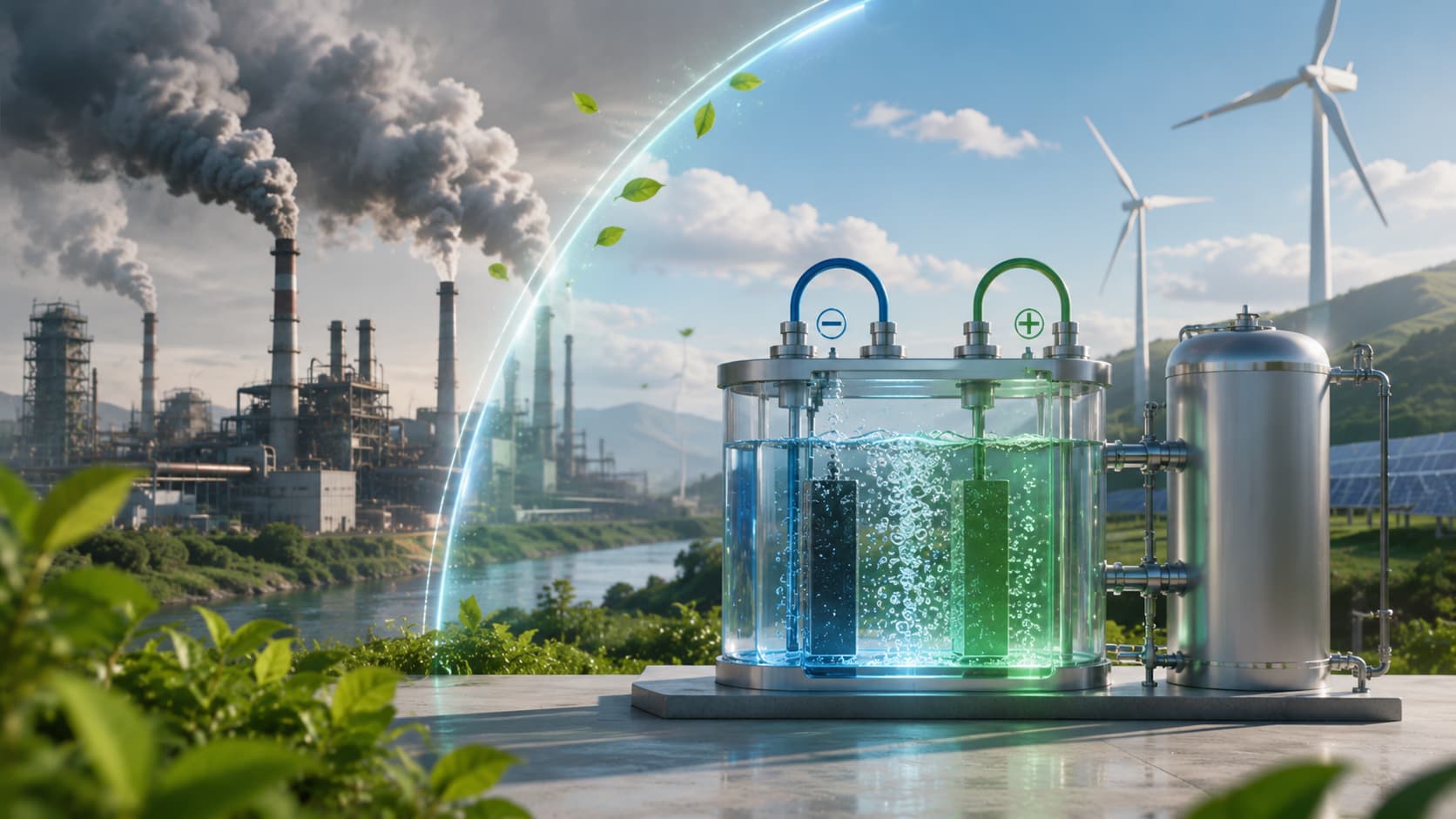
What Industrial Electrolysis Is and Why It Is Key to Sustainability
Sustainability has become a strategic priority for the metallurgical industry. The need to reduce emissions, optimize resources, and meet decarbonization goals is driving the transformation of many production processes. In this context, electrolysis and emissions reduction in industrial metal production represent one of the areas with the greatest potential for improvement.
Electrolysis is an electrochemical process that uses electric current to trigger controlled chemical reactions. Its application makes it possible to produce and refine high-purity metals, especially copper and aluminum, which are essential for global electrification, renewable energy, and electric mobility.
From an environmental perspective, electrolysis offers a significant advantage: it enables the replacement of fossil-fuel-dependent processes with electrified processes that can be powered by renewable sources.
Definition of Industrial Electrolysis
Industrial electrolysis is a technology that uses electrical energy to induce chemical reactions used in the separation, extraction, or refining of materials. In metallurgy, it is used to obtain metals with high levels of purity and controlled properties.
Industrial Electrification and the Energy Transition
Industrial electrification involves replacing fossil-fuel-based processes with technologies powered by electricity. Electrolysis is one of the pillars of this transition because it facilitates the integration of renewable energy into complex industrial processes.
The Role of Electrolysis in Copper and Aluminum Production
Electrolytic Copper Refining
The production of refined copper uses electrolysis to remove impurities and achieve purity levels above 99.9%. This level of quality is essential for electrical applications where conductivity is a critical factor.
The quality of refined copper directly influences the performance of conductors, transformers, motors, and energy systems.
Aluminum Production Through Electrolysis
Primary aluminum production is based on electrolytic processes that separate aluminum from alumina. This is an energy-intensive activity, which is why the source of the electricity used has a decisive influence on the environmental footprint of the final product.
Emissions Associated with Industrial Metal Production
To understand how electrolysis can contribute to sustainability, it is first necessary to analyze the origin of industrial emissions.
Direct and Indirect Emissions
Direct emissions come from the chemical reactions themselves and from the fuels used during production.
Indirect emissions are associated with the electricity consumption required to power industrial processes.
For this reason, emissions reduction depends both on process efficiency and on the source of the energy used.
Carbon Footprint and Energy Intensity
Two widely used indicators for assessing the sustainability of metallurgical processes are:
- Carbon footprint per ton produced.
- Energy consumption per unit of production.
Improving both parameters is one of the main objectives of modern industry.
How Electrolysis Helps Reduce Industrial Emissions
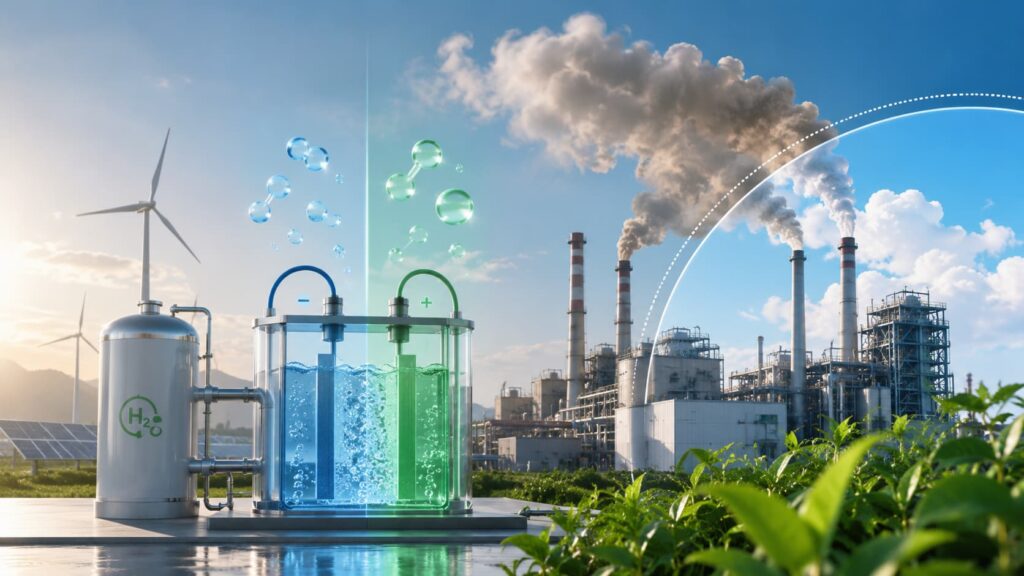
Greater Control of the Production Process
Electrolysis makes it possible to precisely control critical variables such as current intensity, temperature, and chemical composition.
This level of control enables more efficient use of energy and reduces operational losses.
Integration of Renewable Energy
One of the main environmental benefits of electrolysis is its ability to operate with electricity from renewable sources.
When the energy used comes from sources such as solar or wind power, the carbon intensity of the process can be significantly reduced.
Reduction of Fuel-Related Emissions
The electrification of certain processes reduces dependence on fossil fuels and supports the transition toward lower-emission production models.
Framework for Optimizing Electrolytic Processes and Reducing Emissions
Organizations can apply a structured approach based on five pillars:
- Monitor energy consumption.
- Optimize current densities.
- Automate process control.
- Integrate renewable electricity.
- Continuously analyze environmental indicators.
Digitalization and Automation
Monitoring systems make it possible to identify operational deviations and apply improvements in real time.
Predictive Maintenance
Early detection of anomalies helps improve energy efficiency and extend equipment service life.
Industrial Benefits of More Sustainable Electrolysis
Reduced Energy Costs
Greater energy efficiency means less energy consumed per ton produced.
Improved Product Quality
Precise process control makes it possible to obtain more homogeneous materials with higher purity levels.
ESG and Regulatory Compliance
Environmental improvement facilitates compliance with regulatory requirements and strengthens ESG strategies for manufacturers and distributors.
Circular Economy and Metallurgical Sustainability
The sustainability of the copper and aluminum industry does not depend solely on electrolysis. The circular economy plays a fundamental role by promoting material reuse, reducing the consumption of natural resources, and using secondary raw materials to manufacture new products with the same technical performance.
The main circular economy strategies applied to the metallurgical industry include:
- Recycling of metallic materials.
- Reduction in the consumption of virgin raw materials.
- Reuse of copper scrap as a production resource.
- Optimization of industrial waste.
- Reduction of the carbon footprint through more efficient processes.
The combination of optimized electrolysis with production models based on the circular economy is one of the most effective strategies for reducing the environmental impact of the metallurgical sector and moving toward a more sustainable industry.
Cunext Group’s Commitment to Green Copper
This commitment to sustainability is part of the industrial strategy of Cunext Group, which is developing a Green Copper Factory project in Córdoba, Spain. This initiative aims to produce high-quality copper through electrolysis processes using copper scrap as raw material, promoting a production model based on the circular economy.
By using recycled copper, the project seeks to reduce the consumption of natural resources and lower the environmental footprint associated with copper production, while maintaining the high quality standards required for electrical and industrial applications.
The Green Copper Factory is an example of how technological innovation, industrial process electrification, and the recovery of recycled materials can be integrated to address today’s decarbonization challenges. This approach positions Cunext Group as a company committed to developing more sustainable solutions for sectors such as energy, electric mobility, infrastructure, and industry.
Strategic Applications of Sustainable Copper and Aluminum
Infrastructure Electrification
Modern power grids require high-quality copper and aluminum to ensure efficiency and safety.
Renewable Energy
Solar and wind farms depend on conductive materials produced through increasingly sustainable processes.
Electric Mobility
Electric vehicles, railway systems, and charging infrastructure use large quantities of copper and aluminum.
How Cunext Service Solutions Can Help
Cunext Service Solutions participates in industrial supply chains where quality, traceability, and sustainability are key elements.
As part of the Cunext Group, the company provides copper and aluminum solutions adapted to strategic sectors driving the energy transition and global electrification.
The combination of technical expertise, material quality, and a commitment to continuous improvement supports industrial projects focused on efficiency and sustainability.
Conclusion: Electrolysis, Efficiency, and the Future of Industry
Electrolysis plays an essential role in modern copper and aluminum production. Its ability to improve material quality, optimize resources, and facilitate the integration of renewable energy makes it a strategic tool for reducing industrial emissions.
The combination of electrification, energy efficiency, digitalization, and circular economy will help build a more competitive metallurgical industry aligned with global sustainability goals.
Frequently Asked Questions About Electrolysis and Industrial Sustainability (FAQs)
It is an electrochemical process that uses electricity to produce or refine materials through controlled chemical reactions.
It can help reduce them when combined with renewable electricity and energy-efficient processes.
Electrolysis can be powered by renewable electricity, reducing the carbon intensity of the production process.
Because it helps reduce operating costs, lower emissions, and improve industrial competitiveness.
They are essential materials for power grids, renewable energy, energy storage, and electric mobility.